
Four Steps to Fall and Winter Pond Maintenance
Leaves and dead plants keep breaking down after the water cools. This cold-water program handles them from 34 to 60°F, for as long as your pond stays open.
What Happens in a Pond After the Leaves Drop
Leaves, dying weeds and algae settle on the bottom each fall. As that material decomposes, it uses oxygen, turns to muck, and releases ammonia, nitrogen and phosphorus into the water. Fall turnover then mixes low-oxygen, nutrient-rich bottom water through the pond.
Those nutrients fuel algae and weed growth when the water warms in spring. Many bacteria slow or stop below 40 to 50°F, so a pond needs cold-water biology to keep digesting that material while it is still open.
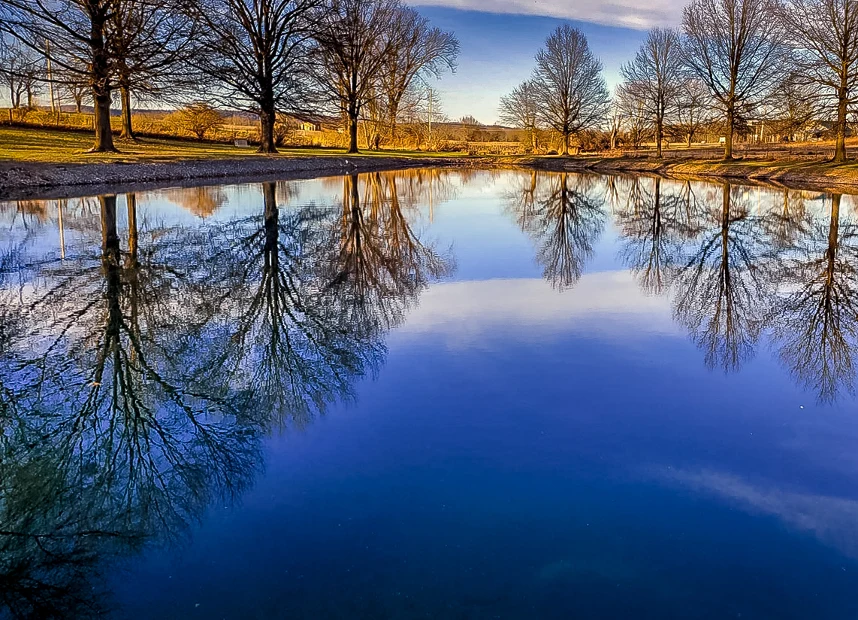
Let Water Temperature Set the Schedule
Each treatment has its own working range. The two cold-water bacteria blends slow down at or above 60°F.
Below 34°F 50 to 60°F is a judgment call
Start at 60°F
In fall, 60°F is the switch point. Between 50 and 60°F the timing is a judgment call, so check your local readings first.
Stop at ice
Stop treating when ice forms, including a partial ice-over. Restart at ice-out.
Above 60°F all winter
Stay with your warm-water bacteria treatments and keep applying Pondzilla Pro and Phosphate Eliminator.
The Four Steps
All four can go in on the same day, in this order.
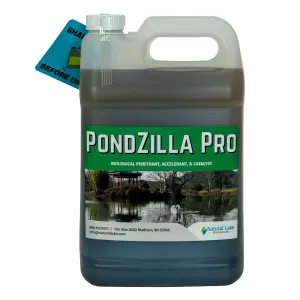
Break down the leaves with Pondzilla Pro
Leaves and dead plants are made of hard forms of carbon that bacteria struggle to digest. Pondzilla Pro is an all-natural enzyme that converts them into a form the bacteria can use, speeding the breakdown of leaves, weeds and algae by 50 percent. Every pond grows vegetation that will otherwise end up as muck, so this step applies to every pond.
- Apply
- Mix with water and spray across the pond, adding extra coverage where leaves collect.
- Dose
- 32 oz in 2 gallons of water per 1/4 acre. More is fine where leaves are heavy.
- Repeat
- Every 2 weeks
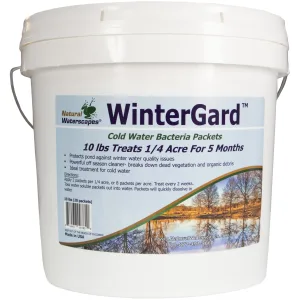
Protect the water with WinterGard
Muck and other organic waste keep releasing ammonia after warm-water bacteria have largely shut down. WinterGard is a blend of cold-water bacteria, enzymes and stimulants that helps convert toxic un-ionized ammonia into less harmful forms and keeps leaves, fish waste and other organics breaking down.
- Apply
- Toss the water-soluble packets into the pond.
- Dose
- 2 packets per 1/4 acre
- Repeat
- Every 2 weeks
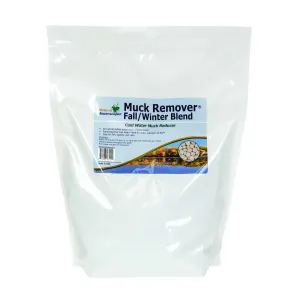
Digest the bottom muck with Muck Remover Fall/Winter
These pellets sink to the bottom and dissolve, releasing billions of cold-water bacteria directly into the muck layer. The bacteria feed on decaying leaves, dead vegetation and fish waste, and with continued application the muck layer compacts and diminishes. Leaf material that Pondzilla Pro has already started breaking down is easier for them to digest.
- Apply
- Broadcast the pellets across the pond.
- Dose
- 2.5 lb (5 scoops) per 1/4 acre
- Repeat
- Once a month
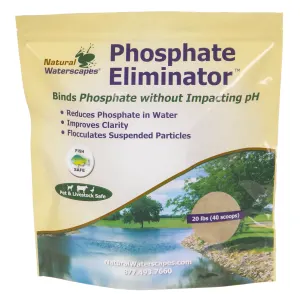
Remove phosphate with Phosphate Eliminator
Decomposition and fall turnover release phosphorus into the water, and phosphate feeds algae growth and can cloud water. Phosphate Eliminator removes it without harming fish and buffers pH so there is no fluctuation as phosphate drops.
About 90 percent of ponds need this step. The exceptions are very nutrient-poor ponds high in the headwaters of mountainous regions. If you are not sure about yours, test your water.
- Apply
- Dissolve in 2 to 3 gallons of water and pour along the shoreline.
- Dose
- 2 scoops per 1/4 acre
- Repeat
- Every 2 weeks
Keep your aerator running. Bottom aeration helps prevent strong stratification and reduces the shock of turnover. Run it around the clock through autumn and early winter. Shop bottom aeration
Build Your Full Program
Choose your pond size and season length to see what to order.
Ponds that freeze early have shorter seasons. Use the Water Temperature Map or MyPond to gauge yours.
Your full program
- 2Pondzilla Pro, 1 gallon
- 1WinterGard, 10 lb
- 1Muck Remover Fall/Winter, 10 lb
- 1Phosphate Eliminator, 20 lb
Covers 6 treatments of Pondzilla Pro, WinterGard and Phosphate Eliminator and 3 treatments of Muck Remover Fall/Winter.
Add the full program to cartFree shipping on all four products. You can also buy each one individually in the steps above.
Your Treatment Schedule
| Treatment | Week 1 | Week 3 |
|---|---|---|
| Pondzilla Pro | 32 oz in 2 gal water | 32 oz in 2 gal water |
| WinterGard | 2 packets | 2 packets |
| Muck Remover Fall/Winter | 2.5 lb (5 scoops) | No treatment |
| Phosphate Eliminator | 2 scoops | 2 scoops |
Doses shown are for a 1/4 acre pond. Repeat this 4-week cycle for as long as the water stays open and below 60°F.
Fall and Winter Pond Treatment Questions
When should I start the four-step program?
In fall, 60°F is the switch point. Water between 50 and 60°F is a judgment call, so check local water temperatures on our Water Temperature Map or the local forecast and water temperatures in MyPond.
Can all four treatments go in on the same day?
Yes. All four can be applied on the same day.
Why does Pondzilla Pro come first?
Leaves and other plant material contain hard forms of carbon. Pondzilla Pro starts breaking them into a form the bacteria in Muck Remover Fall/Winter can digest. The pellets carry some enzymes of their own, and Pondzilla Pro jumpstarts that work.
What should I do if my pond freezes?
Stop treating when ice forms, including a partial ice-over, and restart at ice-out.
Is 34°F too cold to treat?
No. A surface reading of 34°F tells us the water at depth is warmer.
My water stays above 60°F all winter. What should I use?
Stay with your warm-water bacteria treatments and keep applying Pondzilla Pro and Phosphate Eliminator.
Does my pond need Phosphate Eliminator?
About 90 percent of ponds do. The exceptions are very nutrient-poor ponds high in the headwaters of mountainous regions. If you are not sure, a water test will tell you. If phosphate tests above 1 ppm, contact us for custom dosing.
Can I use more Pondzilla Pro than the listed rate?
Yes. The program is built on 1 gallon per acre per treatment, and it is fine to use more in areas with heavy leaf accumulation, up to 3 gallons per acre. Treating the full pond is ideal. If budget is a factor, you can concentrate it in the leafy areas.
Which Muck Remover Fall/Winter rate does this program use?
It uses the maintenance rate, which is the right rate when you treat the entire pond. The higher targeted rate is typically reserved for large bodies of water where only part of the water is being treated.
Are these treatments safe for fish, pets and swimmers?
All four are safe for fish. Pondzilla Pro and Muck Remover Fall/Winter have no water use restrictions. WinterGard is safe for fish, wildlife and recreational use immediately after application. Phosphate Eliminator is safe for all aquatic and domestic life.
What if I have product left over?
Some package sizes cover more than one season. WinterGard and Muck Remover Fall/Winter also work as early spring treatments, after ice-out and before the water reaches 60°F. Phosphate Eliminator can be used at any water temperature.
Ponds Larger Than 2 Acres or Smaller Than 1/4 Acre
Call us Monday through Friday, 8 AM to 6 PM Eastern, and we will size the program with you.