
Natural Waterscapes
Pond & Lake Shoreline Seed Mix
- UPC:
- 854437007275
- Availability:
- Usually ships in 24 hours
- Shipping:
- Calculated at Checkout




Shoreline Seed Mix- Aquatic Plant Seeds
- Blend of beneficial pond plants
- Plant for shoreline stabilization
- Ideal aquatic plants for habitat improvement
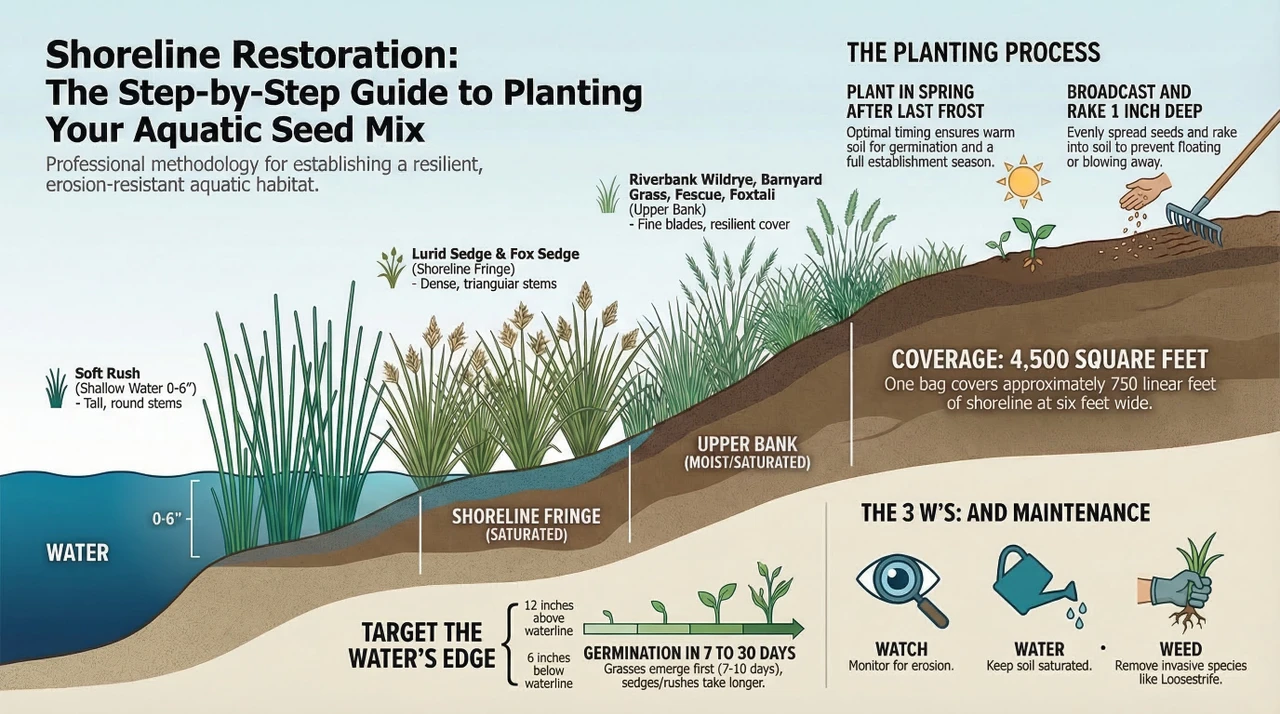
The Pond & Lake Shoreline Seed Mix contains a specialized selection of grasses, sedges, and rushes to establish an erosion resistant root system at the water's edge.
Each species in the blend is selected for it's microhabitat on the shoreline. The sedges like to have their roots in the water, but the crown of the plant out of the water. With their extensive, dense root mass, they do the hard work of protecting against wave action. Sedge roots often extend 18" or more into the soil.
The rushes in the blend grow in water up to 6". The stems provide excellent habitat for bluegill fry and minnows. There is no need to worry about the rushes taking over the pond because they do not grow in deeper water. The rush species are also a favorite for source for birds and waterfowl.
Aquatic Seed Coverage
Covers up to 4,500 square feet or 750 feet of shoreline 6 feet wide.
Where To Apply Shoreline Seed:
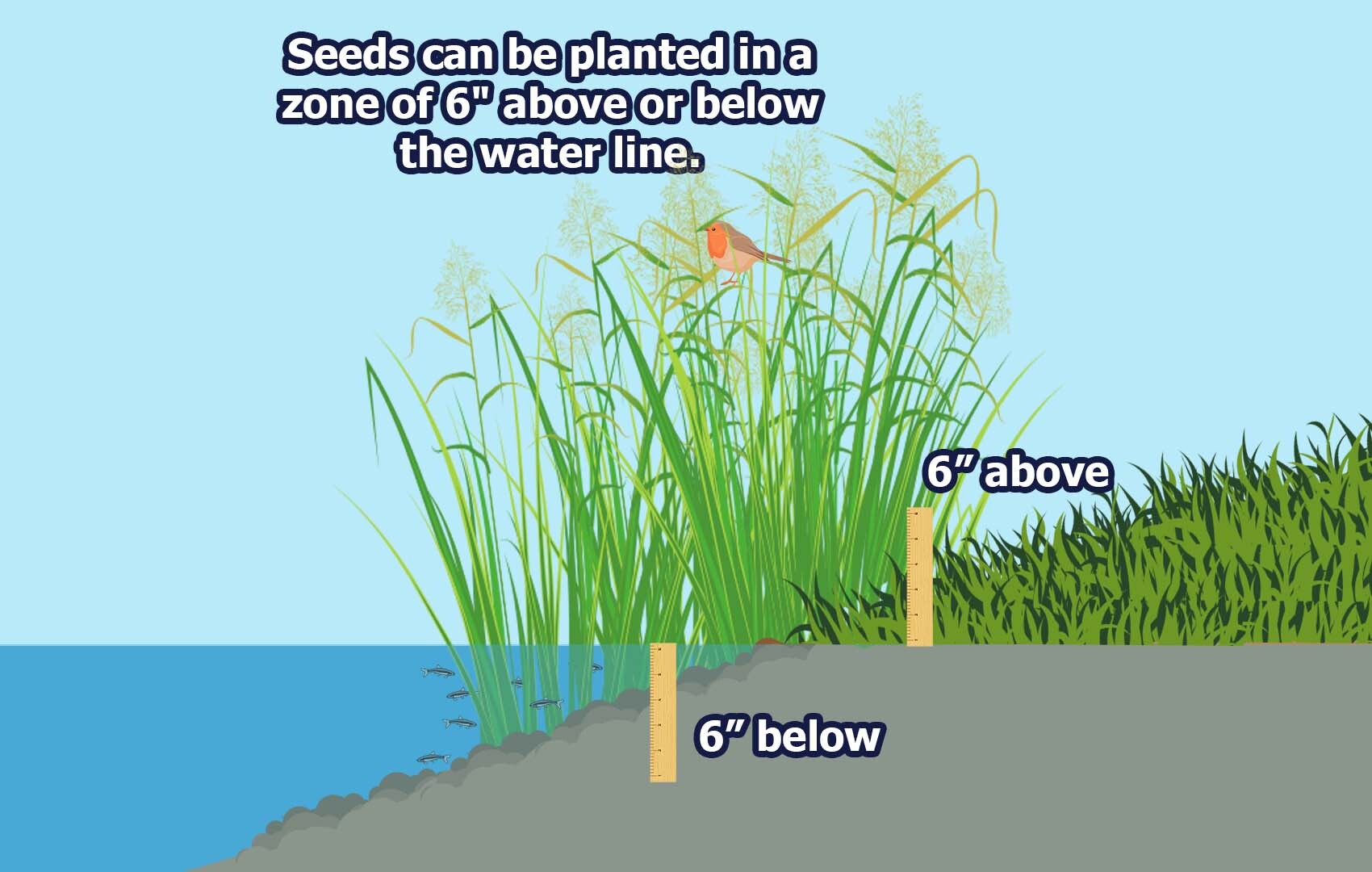
The pond plant seeds grow best in water 6" above the water level to 6" below the water line. Can grow up to 12" above the water line.
How to plant aquatic seed:
Broadcast seed in recommended shoreline areas. Rake seed approximately 1" into soil to prevent aquatic seeds from blowing away or floating away.
Germination time on each species varies , but begins at approximately 7-10 days for aquatic grasses. Some species take up to 30 days to germinate.
Shoreline Seed Establishment Tips:
- Prepare a clean seedbed by removing weeds, grass, leaves, and debris before seeding.
- Loosen the top 1–2 inches of soil to improve seed-to-soil contact.
- Do not plant seeds too deep. Most shoreline seeds should be lightly raked into the soil and covered with no more than ¼ inch of soil.
- Keep the soil consistently moist during germination. Do not allow the seedbed to dry out.
- Water newly seeded areas daily during dry weather until seedlings are established.
- Seed before a period of expected rainfall whenever possible.
- Apply clean, weed-free straw or an erosion control blanket on slopes to help retain moisture and prevent seed loss.
- Protect seeded areas from heavy foot traffic, pets, and equipment until plants become established.
- Avoid excessive fertilizer applications, which can encourage weeds and increase nutrient runoff into ponds and lakes.
- Control competing weeds early to give young seedlings the best chance of success.
- Be patient. Many native shoreline species germinate more slowly than traditional lawn grasses.
- Some species may take several weeks to emerge, while others may not fully establish until the following growing season.
- Expect much of the first year's growth to occur below ground as plants develop strong root systems.
- For best results, seed in early spring or fall when soil moisture is more consistent and temperatures are moderate.
- Steep shorelines may require additional protection from wave action and heavy rainfall to prevent seed washout.
- Germination and establishment rates will vary based on weather conditions, soil type, moisture levels, and site preparation.
- Birds, waterfowl, and other wildlife may consume newly applied seed, especially before it has been worked into the soil. Just as with lawn grass seed, lightly raking seed into the soil and using straw mulch or erosion control blankets can help reduce seed loss and improve germination success.
Common Causes of Poor Germination:
- Seed planted too deep
- Insufficient watering during germination
- Poor seed-to-soil contact
- Seed washed away by rain, waves, or runoff
- Heavy weed competition
- Drought or extreme heat after planting
- Disturbance from foot traffic, pets, or wildlife
Related Products
Related Products

FREE Pond and Lake Management Catalog

Pond Renu - Koi Pond Shock Treatment

Pond Shield Sealant for Concrete Ponds 1.5 qt
