
Safe Haven Kit by Mossback
- Shipping:
- Free Shipping


Quick Navigation: Overview | How It Works | Best Use | How to Use | Limitations | FAQs
Fish Habitat Overview
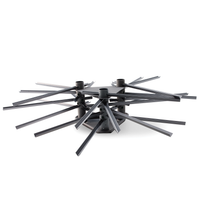
The MossBack Safe Haven Kit (4018 – 3 Post Kit) is a deep-water fish habitat structure designed to create dense protective cover in ponds and lakes. Its three-post configuration forms a concentrated vertical refuge that mimics submerged timber and root systems, providing fish with security and defined holding areas.
The Safe Haven layout is designed to increase structural density, making it well suited for deeper zones where fish seek protection from pressure, predators, and seasonal environmental shifts.
How This Fish Habitat Works
Fish use structure because it changes how they move, feed, and position within a water body. The Safe Haven 3-Post configuration supports fish behavior by:
- Creating dense vertical cover: Multiple upright posts extend through the water column, giving fish depth-specific positioning options.
- Providing protective refuge: Tighter structural spacing increases concealment for forage and predator species alike.
- Establishing a reliable holding zone: In open or minimally structured basins, concentrated habitat becomes a consistent orientation point.
- Increasing habitat diversity: Adding artificial timber-style structure improves usable space in ponds lacking natural wood or vegetation at depth.
Best Use Cases
- Deep-water placement in ponds or lakes with limited natural structure.
- Drop-offs and contour transitions where fish shift seasonally between shallow and deep water.
- Main-lake humps or basin edges where vertical reference improves fish concentration.
- Fishery development plans where long-term habitat placement is mapped and intentional.
How to Use This Product
1) Identify strategic structure zones
- Choose locations along depth breaks, channel swings, or known travel corridors.
- Avoid random placement in featureless areas without structural context.
2) Assemble the 3-post system
- Follow MossBack assembly guidance to properly secure all trunk and branch components.
- Confirm all fasteners are tightened and structural components are aligned before deployment.
3) Deploy for deep-water installation
- Lower the structure carefully to maintain upright orientation.
- Confirm whether the unit is self-weighted or requires additional anchoring according to manufacturer recommendations.
- Ensure stable bottom contact to prevent tipping or shifting.
4) Mark and monitor
- Record GPS coordinates or sonar waypoints to consistently relocate the structure.
- Verify proper upright positioning when possible.
Limitations & Misuse Scenarios
- Not a water-quality solution: Habitat structures attract fish but do not correct oxygen depletion, algae blooms, or nutrient imbalances.
- Incorrect placement reduces performance: Installing away from depth transitions or fish movement routes may limit effectiveness.
- Improper stabilization: Failure to follow deployment guidance can result in tipping or migration from the intended location.
- Habitat concentration: Installing multiple units in one small area may reduce overall pond coverage.
Frequently Asked Questions
Is the Safe Haven Kit intended for shallow or deep water?
The 4018 – 3 Post Safe Haven Kit is designed for deep-water habitat placement. It performs best along drop-offs, basin edges, and transitional depth zones.
Will fish use it immediately?
Fish may relate to new structure quickly if placed along established movement routes. In other cases, usage increases over time as fish adapt to the new habitat.
Does this require anchoring?
Deployment requirements depend on manufacturer specifications and bottom conditions. Always follow MossBack guidance for proper installation and stability.
How many units should I install?
Quantity depends on pond size, existing natural cover, and fishery goals. Strategic spacing across multiple structural areas typically produces more consistent results than concentrating all habitat in one location.
Is this safe for fish and forage species?
When assembled and installed correctly according to manufacturer instructions, habitat structures provide protective cover and ambush opportunities without harming fish populations.
Related Products
Related Products

Safe Haven Fish Habitat by Mossback
Root Wad Kit by Mossback

Trophy Tree Kit by Mossback
