
Root Wad Kit by Mossback
- Shipping:
- Free Shipping


Quick Navigation: Overview | How It Works | Best Use | How to Use | Limitations | FAQs
Fish Habitat Overview
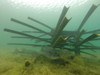
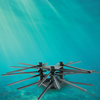
The MossBack Root Wad Kit is a deep-water fish habitat structure designed to add complex cover and defined “edge” in ponds and lakes. It assembles into a root-wad style layout that creates shade, breaklines, and hiding areas that fish commonly use for holding, feeding, and protection.
Kit components include a triangle base, a triangle shade top, screws, and multiple trunk and limb pieces for building a branched structure.
How This Fish Habitat Works
Fish relate to structure because it changes how they use a water body. A root-wad style habitat helps by:
- Creating shade and overhead cover: Shade can make fish feel more secure and can concentrate baitfish under/around the structure.
- Adding vertical and horizontal complexity: “Branches” create multiple hiding and ambush points rather than a single hard edge.
- Establishing a defined breakline: The structure creates a consistent target area in open water, which can improve repeatability for fishing and fish location.
- Improving habitat diversity: In featureless basins, added cover can increase the variety of usable space.
Best Use Cases
- Deep-water placement where you want fish-attracting structure away from shore pressure.
- Open-water basins that lack natural cover (no standing timber, rock piles, or vegetation at depth).
- Drop-offs, ledges, and points where fish naturally transition between shallow feeding areas and deeper holding areas.
- New ponds where habitat is being built intentionally and you want predictable structure locations long-term.
How to Use This Product
Because deep-water habitat must stay put to be useful, planning and placement matter as much as assembly.
1) Plan placement before assembly
- Choose locations that are easy to relocate and re-find (GPS marks, mapped contours, or known waypoints).
- In many ponds/lakes, a mix of depths and positions (near a breakline, along a point, or on a flat adjacent to deeper water) is more effective than placing everything in one spot.
2) Assemble the structure
- Use the included base, shade top, trunk pieces, limb pieces, and screws to build the habitat layout.
- Tighten fasteners securely and verify all connections are snug before deployment.
3) Deploy for deep-water use
- Lower the structure carefully to avoid damage and to prevent the habitat from landing upside down.
- Stability/anchoring note: This listing does not specify whether the kit is self-weighted or requires additional anchoring. For deep-water placement, confirm the manufacturer’s deployment method before installing. If additional weight or anchoring is required, follow MossBack’s instructions for your bottom type and depth.
4) Verify position
- Mark the location (GPS/waypoint) so you can consistently return to it for fishing and monitoring.
- If possible, verify placement with sonar to confirm it landed as intended.
Limitations & Misuse Scenarios
- Not a water-quality tool: Habitat can attract and hold fish, but it does not correct low oxygen, poor clarity, algae blooms, or nutrient issues.
- Placement can “miss” fish movement: If installed away from common travel routes (breaks, points, channel edges), results may feel inconsistent.
- Unsecured deep-water installs can fail: If the habitat is not stable (or is deployed against manufacturer guidance), it may shift, tip, or end up in an unintended location—reducing performance and increasing retrieval difficulty.
- Bottom type matters: Soft muck vs. firm clay/sand can affect how a structure settles and how well it stays oriented.
- Too much in one spot: Over-concentrating habitat can create a single “hotspot,” but it can also limit coverage across the pond/lake. A spaced plan is often more useful.
Frequently Asked Questions
Is this meant for shallow water or deep water?
This kit is intended for deep-water structure placement. For best results, place it where fish naturally hold or transition (such as along drop-offs and open-water edges) rather than randomly in the middle of a flat.
Do I need to add extra weight or anchoring?
This listing does not specify whether this kit is self-weighted. For deep-water installs, confirm the recommended deployment method in MossBack’s instructions. If additional anchoring or weight is required, follow the manufacturer’s guidance for safe, stable placement based on your depth and bottom conditions.
What’s the most common reason fish habitat “doesn’t work”?
Placement. If habitat is installed away from travel routes, depth transitions, or feeding areas, fish may not use it consistently. The second most common issue is instability (structure shifts or tips), which reduces the shade/edge effect and makes the location less repeatable.
How many should I install?
That depends on pond/lake size, existing natural cover, and your goals (fish holding areas vs. fishing locations). In general, multiple smaller placements across several strategic areas create more usable “networked” habitat than putting everything in one single pile.
Will this attract fish immediately?
Sometimes, especially if placed along existing fish routes. In other cases, fish use increases over time as they “learn” the new structure location and as baitfish begin using it as cover.
Is this safe for fish?
Fish habitat structures are commonly used to add cover and complexity. Safety depends on correct assembly and stable placement so the structure stays oriented and does not shift into unintended areas. Follow the manufacturer’s installation guidance for your pond/lake conditions.
Related Products
Related Products

Root Wad Fish Habitat by Mossback

Trophy Tree Kit by Mossback

Safe Haven Kit by Mossback
